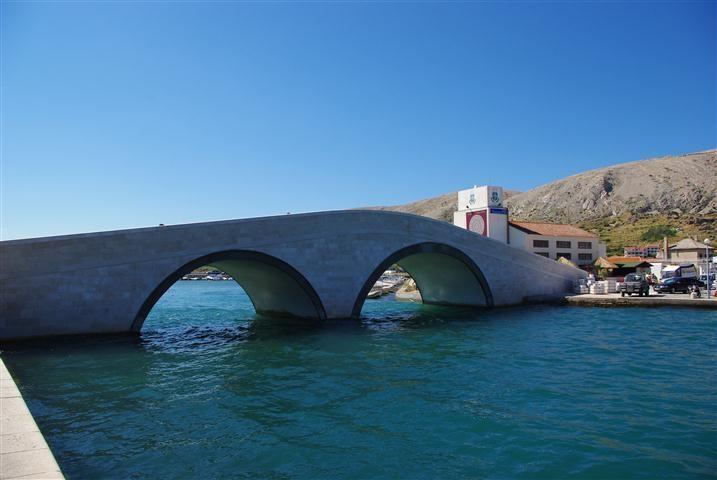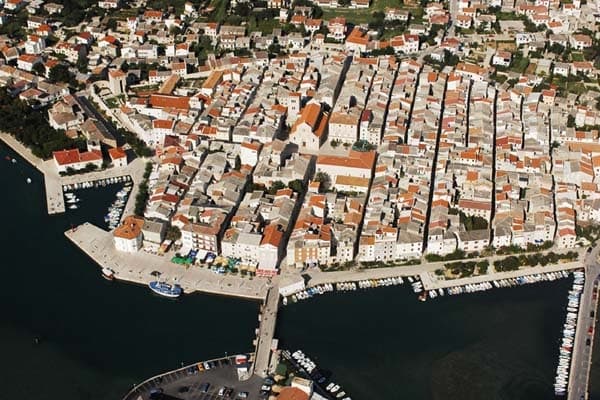
There are places you visit, photograph and leave behind. And there are places that win you over with their story. Pag Town definitely belongs to the second kind.
Set on the island of the same name, Pag is a town that combines a rich historical and cultural heritage with a landscape unlike any other. Its stony scenery, white stone architecture, narrow lanes and sea views create images that stay with you. Yet behind its stone beauty lies much more – centuries of history, fascinating legends, treasured customs and the details that make it truly unique.
The town that moved twice
Pag Town is one of the most interesting places on the island, both historically and culturally. Its past reaches far back into antiquity, and archaeological finds in the area of the Old Town bear witness to an ancient settlement.
After the decline of ancient Cissa, which stood on the site of today's Caska, the Old Town area gradually became the new centre of island life. Over the centuries Pag was an important economic, cultural and administrative centre, and its significance was confirmed on 30 March 1244, when the Hungarian-Croatian King Béla IV granted it a charter as a free royal town.
Throughout history, the people of Zadar and the Venetians fought for control of Pag. After Zadar was conquered in 1202 during the Fourth Crusade, the political situation on the island changed as well.
Because of frequent conflicts, attacks and looting, a decision was made in the 15th century to move the town to a safer and more favourable location, about two kilometres further west.
And so, on 18 May 1443, construction of the new Pag began, following an urban plan drawn up with the help of one of the greatest Croatian architects and sculptors – Juraj Dalmatinac, also known for his work on the Cathedral of St James in Šibenik.
The population moved gradually, and the new Pag became the new heart of island life.
Old Town Pag – a place of stories, faith and legends
Although the town was relocated, Old Pag never disappeared completely. Its remains still preserve the memory of the former settlement.
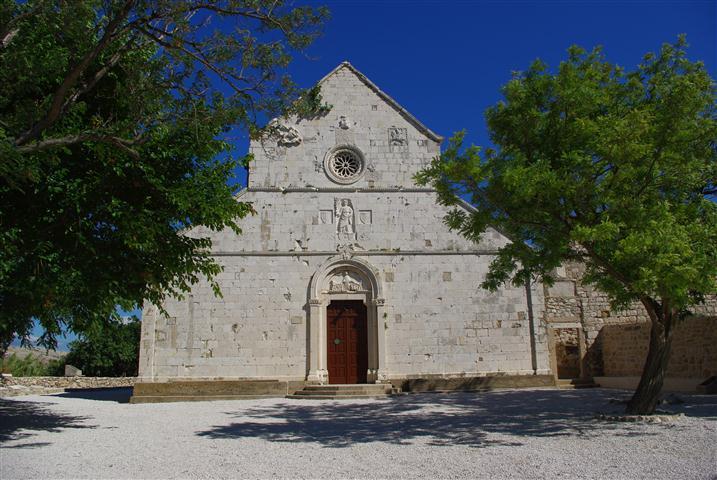
In the Old Town you will find the remains of a former Franciscan monastery and the Church of St Mary, one of the most important historical and spiritual monuments of Pag. The church dates from the 12th century, and its history is linked to an older early Croatian sacred building from the 8th century.
The church houses a wooden Gothic statue of the Mother of God from the 14th century, especially precious to the people of Pag.
A local legend is attached to the statue, according to which the Mother of God once even wept tears of blood. For the people of Pag, the statue is not just a valuable sacred object, but a symbol of faith, community and identity passed down through generations.
The Old Town is also associated with stories of a Slavic sacred triangle, which gives it an additional mystical dimension. A walk through this area is therefore not just a tour of historical remains, but also an encounter with stories that the people of Pag cherish and pass on from generation to generation.
A vow to the Mother of God – a tradition kept since 1855
One of the most special stories of Pag Town is linked to the Feast of the Assumption and the traditional procession of Our Lady of the Old Town.
In the mid-19th century, between 1852 and 1855, Pag was struck by a severe cholera epidemic. The disease claimed many lives, and in fear and uncertainty the townspeople sought help and comfort in their faith.
On the Feast of the Assumption, 15 August 1855, the people of Pag decided to carry the statue of the Mother of God from the Church of St Mary in the Old Town to the new town church of the Assumption of Mary.
According to tradition, the epidemic ended soon afterwards, and the last cholera victims were buried on 16 August, the Feast of St Roch.
As a sign of gratitude and a vow, the people of Pag decided that every year on the Feast of the Assumption the statue would be solemnly carried from the Old Town to the new town church, where it would remain until the Feast of the Nativity of Mary, when it returns to its old church.
This is how a tradition was born that has been kept since 1855 and is today one of the most important religious and cultural events on the island.
Every year on 15 August, many locals, pilgrims and visitors take part in this special procession. It is a moment when past and present meet, and the whole town once again becomes one great community.
For anyone who wants to get to know the real Pag, this tradition offers an experience that goes far beyond an ordinary sightseeing tour.
New Pag – a town of palaces, stone streets and remarkable monuments
Today's Pag Town was built to a plan, with a regular layout of streets and squares. Its stone old town radiates a special Dalmatian charm.
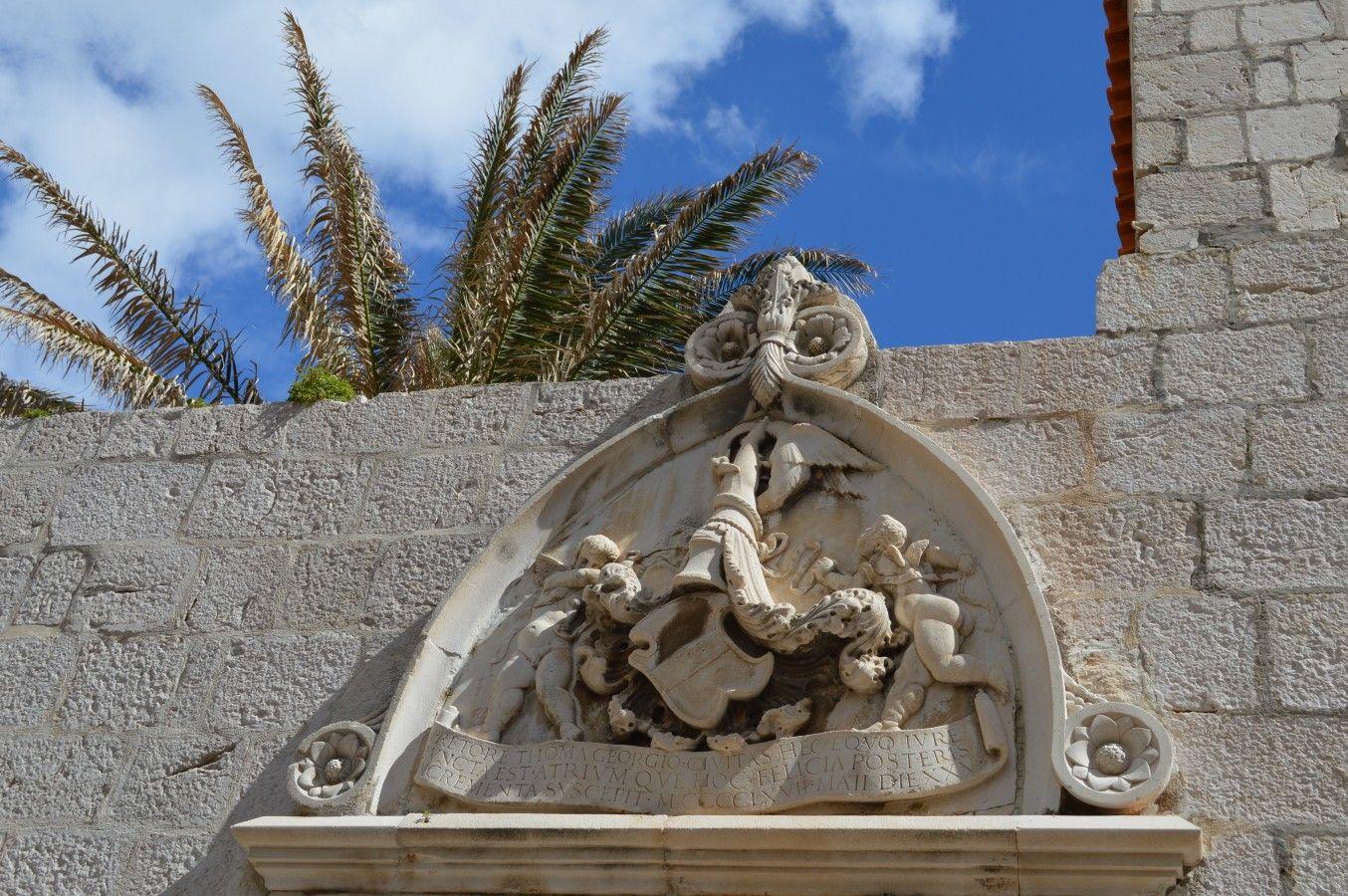
As you stroll through the town, take a look at the palaces and their stone portals. You can still make out the coats of arms of distinguished Pag families on them, bearing witness to the town's social and economic life in times past.
The Skrivanat Tower stands out as a living reminder of the former town walls, while remains of the old defensive walls can still be seen in the northern part of the old town.
Do not miss the permanent displays and exhibitions dedicated to Pag lace, traditional costume and the tradition of salt making. Lace making and salt production have shaped the life of the town and its people for centuries.
Pag and its greatest treasure – Pag lace
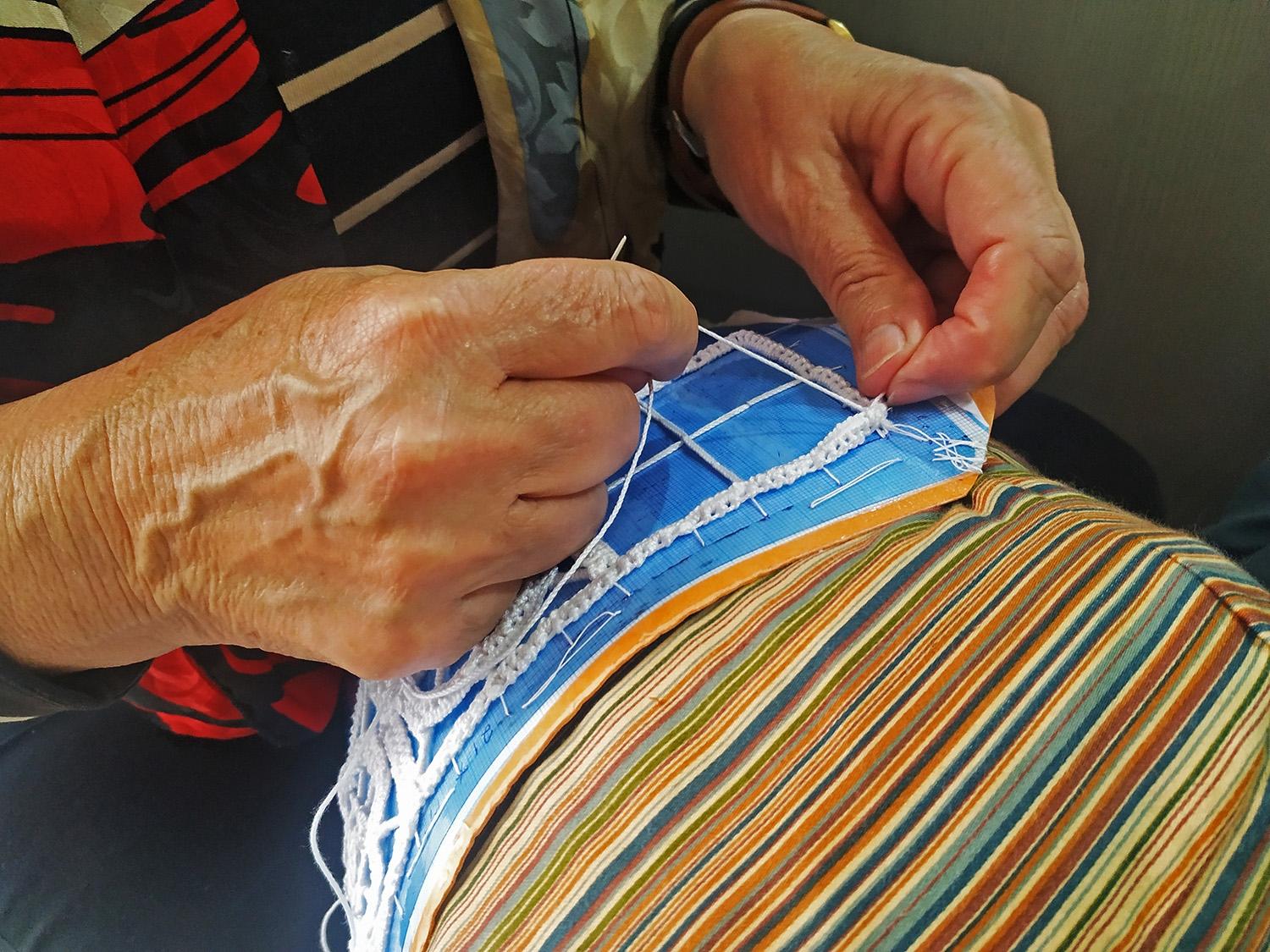
When speaking of Pag's cultural heritage, it is impossible not to mention Pag lace.
This unique handcraft is passed down from generation to generation, and what makes it special is its precision, patience and distinctive geometric motifs.
In 2009, Pag lace was inscribed on UNESCO's Representative List of the Intangible Cultural Heritage of Humanity. It is not merely decoration, but a symbol of identity, tradition and the skilled hands of the women of Pag.
Alongside lace, an important part of the cultural heritage is the traditional folk costume and the saltworks, whose salt production was for centuries one of the island's most important economic activities.
Did you know that Pag keeps a Holy Thorn from the Crown of Jesus?
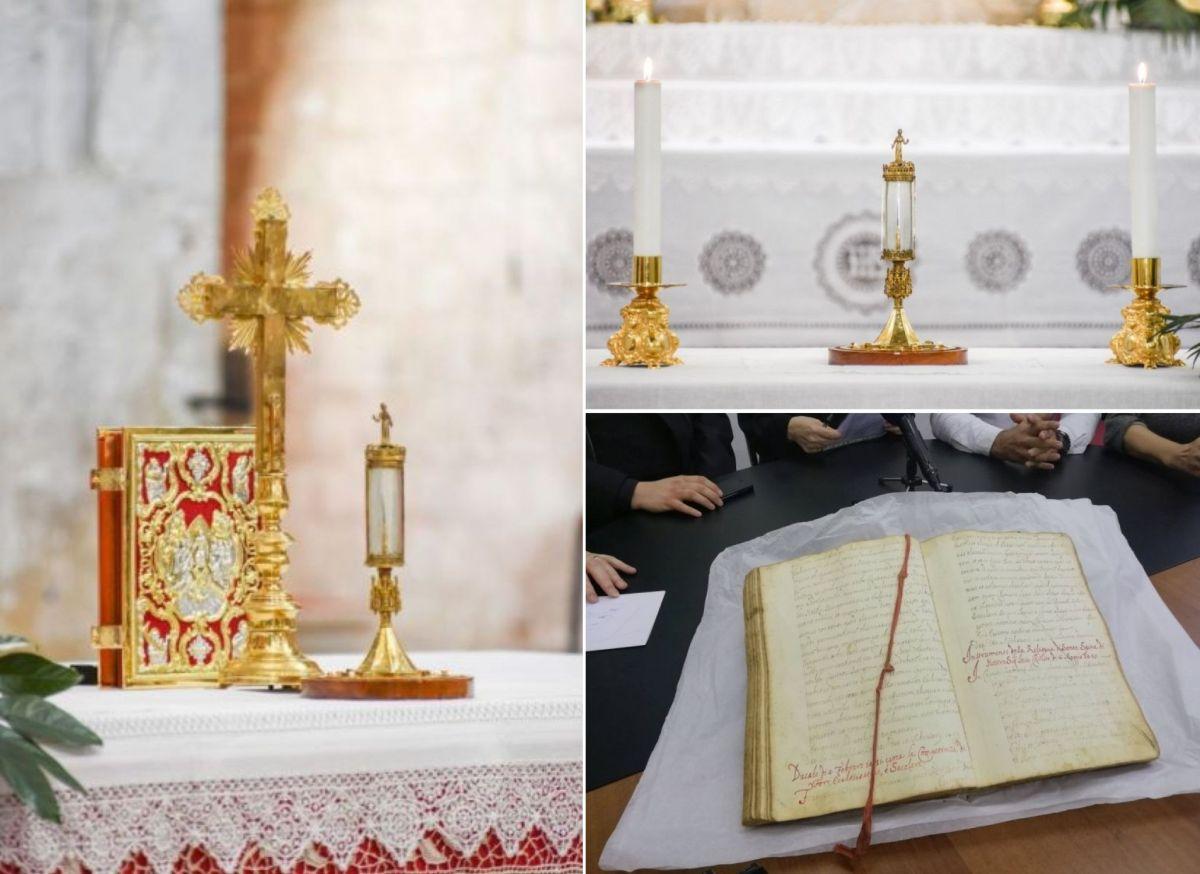
One of the features that makes Pag important on a wider spiritual and cultural level is the relic of the Holy Thorn, kept in the town.
The Holy Thorn of Pag is especially important to believers and, according to church tradition, is associated with the crown of thorns of Jesus Christ. The relic has been kept in Pag for centuries and is part of the town's rich spiritual tradition.
Along with Notre-Dame Cathedral in Paris, Pag is among the places that keep relics associated with Christ's crown of thorns – yet another distinction for our small island community.
The town where the first Croatian grammar was born
Pag has another reason to be proud – it was here, on 15 August 1575, that Bartol Kašić was born: a Croatian linguist, writer and Jesuit who wrote and published the first Croatian grammar in 1604.
His name holds a special place in the history of the Croatian language, and his hometown proudly preserves the memory of this great man.
But the people of Pag also have their own special trait, which you will get to know best by chatting with the locals.
The local Chakavian dialect of Pag is part of the town's identity. Particularly interesting is the local pronunciation of the characteristic word “ča” (meaning “what”), which in the Pag dialect can also be heard as “ca”, without the accent mark on the c.
If, on a stroll through town, you come across a street with the sign “Takvi smo pa ca!” (“That's just how we are!”), you have just met a small but very important part of the Pag character.
Because – takvi smo pa ca!
What else to experience in Pag Town?
Besides its historic sights, Pag also offers a special culinary experience. Here, tradition is best discovered through local produce and recipes handed down through generations.
If you would like to taste home-style flavours and discover the culinary side of the town, we warmly recommend the restaurants Na Tale, Bodulo and Calma.
Enjoy local specialities, traditional recipes and ingredients that best tell the story of this region.
And after a good lunch, continue with a leisurely stroll through the stone streets, pause on one of the town squares and simply let Pag tell you its story.
Discover Pag through the eyes of the locals
Pag Town is not just a summer holiday destination. It is a town that cherishes its past, nurtures its customs and takes pride in the features that set it apart from all others.
From ancient traces and the Old Town, the Church of St Mary and the votive procession, the palaces and the Skrivanat Tower, all the way to Pag lace, salt, the Holy Thorn and the unique local dialect – every corner hides a story.
So when you come to Pag, do not just pass through its streets. Stop, explore, taste the local flavours and listen to the stories of the locals.
Because Pag is not experienced with the eyes alone. Pag is experienced with the heart.
PAG TOURS – discover Pag through stories, tradition and experiences you will always remember.